
|
TL; DR
Bovine colostrum supplementation supports gut repair, immune defense, faster recovery, skin health, and inflammation in adults, with the strongest evidence around gut lining integrity and illness prevention. |
You've probably noticed bovine colostrum showing up everywhere, on social media health routines, wellness blogs, and supplement shelves. And unlike most trending ingredients you see online, this one has substantial research behind it.
But here's the thing most people don't know about colostrum isn't just for newborns. Adults are using colostrum supplements to heal their gut, fight off infections, recover faster, and even improve their skin.
Unlike most trending supplements, bovine colostrum has decades of clinical research on gut lining repair, immune defense, skin health, athletic recovery, and more. And unlike most, it works on multiple systems at once.
So, if your gut's been off, you keep catching every bug, or you just want your skin and energy to reflect how well you're eating, keep reading. The colostrum supplement benefits here might surprise you.
| Growing fast for a reason: The global colostrum market size is anticipated to reach USD 5.43 billion by 2030 and is projected to grow at a CAGR of 7.3% from 2025 to 2030. 1 |
What is Colostrum?
Colostrum is the first milk any mammal produces right after giving birth, before regular milk comes in. It is particularly nutritious and acts like a first vaccination. The proportion of vital and protective substances is especially high, including vitamins, minerals, amino acids, enzymes, hormones, growth factors, and many antibodies.
What is Bovine Colostrum?
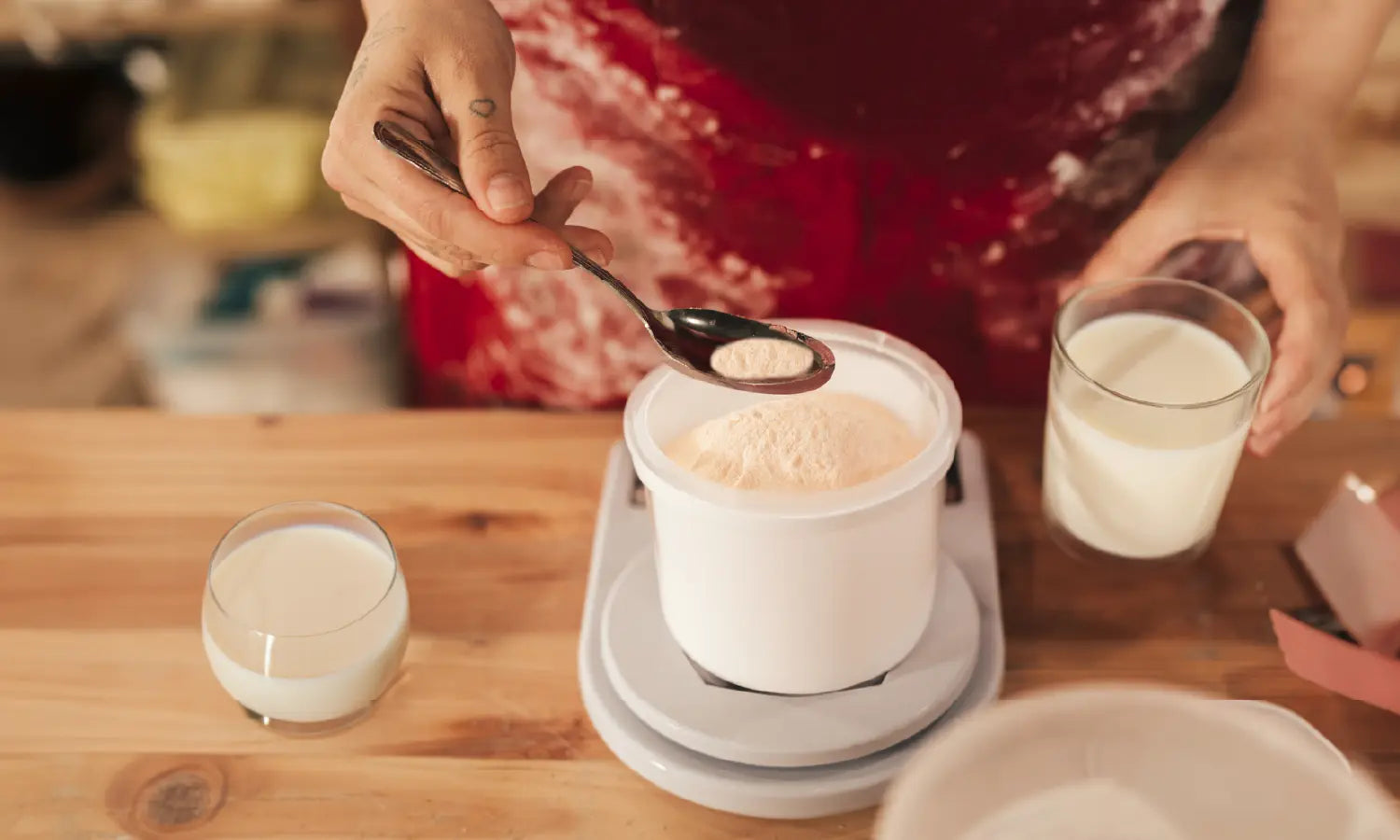
Bovine colostrum is colostrum from cows. It's collected in the first few hours after calving, pasteurized, and dried into powder or capsules to use as supplements.
Bovine colostrum contains about 5x protein of mature dairy milk. It also contains critical protective antibodies and key nutrients including copper, iron, zinc, magnesium, and vitamins B12, D, and E. 2
Bovine colostrum contains IgG as the dominant immunoglobulin, while in human colostrum, IgA is most prevalent. Bovine colostrum is overall higher in immunoglobulins, lactoferrin, and total protein content than human colostrum.
And that's really the heart of it. No synthetic additives, no lab-made formulas, just natural, nutrient-dense food mammals have relied on since birth.
What Does Colostrum Do for Adults?
Once it's in your system, colostrum gets to work in a few key ways, supporting your immune defenses, repairing your gut lining, helping your body recover, and more. Here's a closer look at each one.
-
May Support Your Immune System
Your immune system's first line of defense is at your mucosal surfaces, your throat, nose, and gut lining. That's where most infections get in. And that's exactly where the antibodies in bovine colostrum (IgG and IgA) go to work.
Regular supplementation may help your body fight off infections effectively, recover more quickly from common illnesses, and stay more resilient during periods of stress or heavy physical activity.
Colostrum doesn't just switch your immune system on, it helps regulate it. That matters especially if your immune response is already overactive, as in autoimmune conditions. 3 4 5
-
Bovine Colostrum and Gut Health
Bovine colostrum contains lactoferrin, growth factors, and immunoglobulins that work together to strengthen the gut wall, reduce intestinal permeability (leaky gut), neutralize harmful endotoxins, and support a healthier microbiome balance. For people dealing with IBS or chronic diarrhea, it may also help reduce symptom frequency. 6 7
|
Colostrum vs. Probiotics: What's the Difference? Colostrum works differently from probiotics. Probiotics add beneficial bacteria to your gut. Colostrum repairs the gut wall itself. Different jobs and they work well together. |
-
Colostrum Supplement Benefits for Athletes and Recovery
If you train regularly, colostrum may help you recover faster, protect your immune system during heavy training, and hold on to lean muscle. The growth factors in colostrum support muscle repair at a cellular level, less soreness, quicker bounce-back, and better adaptation over time. 8 9
It may also help offset the short-term immune dip that can follow intense training sessions (not regular exercise), which generally supports immunity. That can mean fewer sick days and more consistent training. 10
| Good to know: Research confirms that taking colostrum at normal daily doses won't interfere with your hormones, so there's nothing to worry about on that front. |
-
Colostrum and Inflammation
Chronic low-grade inflammation sits behind a lot of everyday problems like joint stiffness, fatigue, and slow recovery. Colostrum contains PRPs and cytokines that help bring an overactive immune response back into balance, rather than simply suppressing or stimulating it. This makes it particularly relevant for people with autoimmune conditions or persistent inflammatory symptoms.11
It's also shown real-world results beyond just lab markers, with improvements in pain, mood, and sleep reported alongside reduced inflammation in clinical trials. 12
-
Benefits of Colostrum Powder for Skin Health
Bovine colostrum supports skin health as it contains growth factors that stimulate collagen production and speed up skin cell renewal. Lactoferrin has antimicrobial properties that are helpful for acne-prone or inflamed skin. Hyaluronic acid supports hydration. And telomerase helps slow cellular aging by maintaining telomere length. 13 14
-
Colostrum Benefits for Women: Hormones, Bones, and More
Women have a few specific reasons to look at bovine colostrum beyond the general benefits above.
-
Bone health: IGF-1 and TGF-β in colostrum support bone formation and may help slow density loss. It is especially relevant around and after menopause, when bone loss accelerates. 15
-
Hormonal support: Colostrum contains bioactive peptides that may support hormonal balance. Helpful particularly during menopause and postpartum recovery. 16
-
Autoimmune risk: Women are significantly more likely than men to develop autoimmune conditions. Colostrum's ability to regulate immune responses can help here. 17
-
Postpartum recovery: Growth factors and immune compounds in colostrum may support tissue repair and energy recovery after childbirth. 18
Important Note: The menopause evidence is early and limited. Don't over-rely on a single study, but keep an eye on this area as research grows.
-
Cow Colostrum Benefits for Older Adults
As we age, growth factors drop, immunity weakens, gut integrity decreases, and muscle and bone mass slowly erodes. Colostrum addresses several of these issues at once.
It supports immune antibody levels, raises IGF-1 (a growth factor that declines with age), reduces chronic inflammatory markers, and helps maintain gut barrier function. This is what makes bovine colostrum one of the more practical broad-support supplements for adults over 50. 19 11
Benefits of Taking Colostrum: Who Should Consider It?
-
If you get sick often: Immune support and respiratory infection research are the most relevant benefits for you.
-
If you have gut issues: IBS, leaky gut, NSAID-related gut damage, or exercise-induced gut stress, the gut barrier research is among colostrum's strongest evidence areas.
-
If you train regularly: Recovery, lean muscle support, and immune protection during heavy training are all reasonably supported.
-
If you're a woman: Bone health, hormonal balance, skin support, and postpartum recovery each have relevant (if early) evidence.
-
If you're over 50: The 2025 RCT evidence for older adults is particularly relevant for immune and growth factor support.
-
If you want broad daily support: Colostrum is one of the few supplements with multi-system evidence at a reasonable daily dose.
Side Effects of Colostrum Supplements: What to Know
Bovine colostrum is generally well tolerated. Side effects are rare and usually mild. Some people may experience nausea, bloating, gas, or mild diarrhea. These symptoms often go away on their own without treatment.
Who should check with a doctor first:
-
People with a dairy or milk allergy: Avoid entirely.
-
Those with lactose intolerance: Start low and monitor.
-
Anyone on immunosuppressant medication: Colostrum modulates immune activity.
-
Pregnant or breastfeeding women: Research in these groups is insufficient.
How to Take Colostrum: Timing, Form, and Dosage
-
Powder or capsules? Both are effective. Powder is more flexible for dosing. Capsules are easier for consistency.
-
When? Most clinical studies administered colostrum on an empty stomach in the morning. This is the most recommended for absorption, though taking it with food also works.
How much Bovine colostrum to take?
Dosage depends on your goal. Here's a quick breakdown based on the available research:
Conservative starting dose: 5-10 g daily (about 1-2 teaspoons). This amount is commonly used to support gut health and falls within the lower end of the effective adult dose range.
When will you notice the difference?
-
Gut changes: 2-4 weeks
-
Immune changes: 4-6 weeks
-
Athletic recovery: 3-5 weeks
-
Skin: 8-12 weeks
Note: To accurately assess its benefits, maintain consistent use for a minimum of 8 weeks.
Also Read: When is the Best Time to Take Colostrum?
What to Look for in a Quality Colostrum Supplement
-
Collection timing: Colostrum collected within the first 6-12 hours post-birth has the highest concentration of bioactive compounds concentration, particularly immunoglobulins (IgG), growth factors, and essential nutrients.
-
Processing: Low-temperature pasteurization preserves more bioactive proteins.
-
Source: Grass-fed, hormone-free cows plus ethical sourcing (calves are given their fair share first).
-
Third-party testing: Confirms what's on the label is actually in the product.
|
The Key is when Colostrum is collected
Bioactive levels drop sharply after the first 6 hours post-calving. Reputable products, including Wellness Extract's bovine colostrum powder, collect it within that critical window, after the calf has received its share first. |
 Final Thoughts on Colostrum Benefits for Adults
Bovine colostrum isn't just another wellness trend making headlines. It's a natural, food-based ingredient, not a synthetic formula. It's one of the few natural supplements backed by decades of research, particularly in areas like immune health, gut integrity, and recovery. While it's not a miracle cure, the science behind it is compelling and continues to grow.
If you're looking for a supplement with benefits that extend beyond a single health goal, colostrum is one of the rare options where the research is beginning to match the enthusiasm.
Choose a quality product with ethical sourcing, take it consistently for at least 8 weeks, and pay attention to how you feel. Be clear with yourself about what you're hoping to address; that'll tell you whether it's working.
Disclaimer: This article is for educational purposes only. WellnessExtract.com is not a medical service and does not provide medical advice. Always consult a qualified healthcare professional before starting any new supplement.
Frequently Asked Questions
Q1: Can adults take colostrum every day?
Yes. Clinical trials of up to 12 weeks confirm daily use is safe and well-tolerated for most healthy adults.
Q2: How long does colostrum take to work?
Gut changes can come within 2-4 weeks. Immune and recovery changes at 4-6 weeks. Skin improvements typically take 8-12 weeks.
Q3: What is the best time to take colostrum?
Most research used it first thing in the morning on an empty stomach. That's your best bet, though taking it with food works too if that's easier for you.
Q4: Can people with autoimmune disease take colostrum?
Colostrum helps regulate the immune system rather than simply stimulating it, which is actually relevant for autoimmune conditions. However, no clinical trials have directly tested it in people with diagnosed autoimmune diseases, and it may interact with immunosuppressant medications.
References
-
Grand View Research. (2024, November 14). Colostrum market size, share & trends analysis report by nature (organic, conventional), by source (cow, buffalo, goat), by form, by distribution channel (B2B, B2C), by region, and segment forecasts, 2025–2030. GII Research. https://www.giiresearch.com/report/grvi2040753-colostrum-market-size-share-trends-analysis-report.html?
-
Playford, R. J., & Weiser, M. J. (2021). Bovine colostrum: Its constituents and uses. Nutrients, 13(1), 265. https://www.mdpi.com/2072-6643/13/1/265
-
Hałasa, M., Baśkiewicz-Hałasa, M., Jamioł-Milc, D., Maciejewska-Markiewicz, D., & Skonieczna-Żydecka, K. (2022). Bovine colostrum supplementation in prevention of upper respiratory tract infections–Systematic review, meta-analysis and meta-regression of randomized controlled trials. Journal of Functional Foods, 99, 105316. https://www.sciencedirect.com/science/article/pii/S1756464622003863
-
Baśkiewicz-Hałasa, M., Stachowska, E., Grochans, E., Maciejewska-Markiewicz, D., Bühner, L., Skonieczna-Żydecka, K., & Hałasa, M. (2023). Moderate dose bovine colostrum supplementation in prevention of upper respiratory tract infections in medical university students: A randomized, triple blind, placebo-controlled trial. Nutrients, 15(8), 1925. https://www.ncbi.nlm.nih.gov/pmc/articles/PMC10146600/
-
Duan, H., Sun, Q., Chen, C., Wang, R., & Yan, W. (2024). A review: the effect of bovine colostrum on immunity in people of all ages. Nutrients, 16(13), 2007. https://www.ncbi.nlm.nih.gov/pmc/articles/PMC11242949/
-
Hajihashemi, P., Haghighatdoost, F., Kassaian, N., Hoveida, L., Tamizifar, B., Nili, H., ... & Adibi, P. (2024). Bovine Colostrum in Increased Intestinal Permeability in Healthy Athletes and Patients: A Meta-Analysis of Randomized Clinical Trials. Digestive Diseases and Sciences, 69(4), 1345-1360. https://pubmed.ncbi.nlm.nih.gov/38361147/
-
Dziewiecka, H., Buttar, H. S., Kasperska, A., Ostapiuk-Karolczuk, J., Domagalska, M., Cichoń, J., & Skarpańska-Stejnborn, A. (2022). A systematic review of the influence of bovine colostrum supplementation on leaky gut syndrome in athletes: diagnostic biomarkers and future directions. Nutrients, 14(12), 2512. https://www.mdpi.com/2072-6643/14/12/2512
-
Cieślicka, M., Stankiewicz, B., Muszkieta, R., Tafil-Klawe, M., Klawe, J., Skarpańska-Stejnborn, A., & Ostapiuk-Karolczuk, J. (2023). Long-term bovine colostrum supplementation in football players. Nutrients, 15(22), 4779. https://www.mdpi.com/2072-6643/15/22/4779
-
Davison, G. (2021). The use of bovine colostrum in sport and exercise. Nutrients, 13(6), 1789. https://pmc.ncbi.nlm.nih.gov/articles/PMC8225123/
-
Durkalec-Michalski, K., Główka, N., Podgórski, T., Woźniewicz, M., & Nowaczyk, P. M. (2024). The effect of 12-week high-dose Colostrum Bovinum supplementation on immunological, hematological and biochemical markers in endurance athletes: a randomized crossover placebo-controlled study. Frontiers in Immunology, 15, 1425785. https://www.frontiersin.org/journals/immunology/articles/10.3389/fimmu.2024.1425785/full
-
Ooi, T. C., Ahmad, A., Rajab, N. F., & Sharif, R. (2023). The effects of 12 weeks colostrum milk supplementation on the expression levels of pro-inflammatory mediators and metabolic changes among older adults: findings from the biomarkers and untargeted metabolomic analysis. Nutrients, 15(14), 3184. https://pmc.ncbi.nlm.nih.gov/articles/PMC10384749/
-
Gouhari, F., Zandi, R., Talebi, S., Mehrvar, A., & Shariatpanahi, Z. V. (2024). Colostrum supplementation enhance mental health status and alleviate pain in patients with acetabular fracture: A randomized, controlled, clinical trial. Journal of Functional Foods, 119, 106325. https://www.sciencedirect.com/science/article/pii/S175646462400327X
-
Bolat, E., Karagöz, Z., Alves, J. L. D. B., Neto, J. P. R. C., Witkowska, A. M., El-Seedi, H., ... & Karav, S. (2024). The potential applications of natural colostrum in skin health. Cosmetics, 11(6), 197. https://www.mdpi.com/2079-9284/11/6/197
-
Yalçıntaş, Y. M., Duman, H., López, J. M. M., Portocarrero, A. C. M., Lombardo, M., Khallouki, F., ... & Karav, S. (2024). Revealing the potency of growth factors in bovine colostrum. Nutrients, 16(14), 2359. https://pmc.ncbi.nlm.nih.gov/articles/PMC11279796/
-
Ramani, A., Taherabbas, S., & Manik, S. (2024). Bovine colostrum as a promising nutraceutical: a systematic review. Sustainable Food Technology, 2(3), 531-547. https://pubs.rsc.org/en/content/articlehtml/2024/fb/d3fb00256j
-
Goldoust, M., Arefnia, A., & Rahimparvar, S. F. V. (2024). The effects of bovine colostrum consumption on women’s health: A systematic review. Journal of Hospital Pharmacy, 19(3, September Supplement Issue 1), 10. https://www.johp.journalofhospitalpharmacy.in/admin/freePDF/56uisd6cfcmxzvi3zx4x.pdf
-
Khan, T. S., Akram, N., Faisal, Z., Saeed, F., Rasheed, A., Ahmed, F., & Afzaal, M. (2024). Bovine colostrum: Therapeutic potential and clinical evidence. International Dairy Journal, 157, 105996. https://www.sciencedirect.com/science/article/abs/pii/S095869462400116X
-
Playford, R. J., & Weiser, M. J. (2021). Bovine colostrum: Its constituents and uses. Nutrients, 13(1), 265. https://pmc.ncbi.nlm.nih.gov/articles/PMC7831509/
-
Dukaew, N., Klinjan, P., Inpan, R., Takuathung, M. N., Jiranusornkul, S., Chaichit, S., ... & Koonrungsesomboon, N. (2025). Effects of the colostrum-containing multi-nutrient dietary supplement on immune, muscle, bone, and cognitive function parameters in the elderly: A randomized, double-blind, placebo-controlled trial. Journal of Functional Foods, 128, 106816. https://www.sciencedirect.com/science/article/pii/S1756464625001586
-
Supplement Science Editorial Team. (2026, March 11). Colostrum dosage guide. Supplement Science. https://supplementscience.ai/supplements/colostrum/dosage
-
Durkalec-Michalski, K., Główka, N., Podgórski, T., Woźniewicz, M., & Nowaczyk, P. M. (2024). The effect of 12-week high-dose Colostrum Bovinum supplementation on immunological, hematological and biochemical markers in endurance athletes: a randomized crossover placebo-controlled study. Frontiers in Immunology, 15, 1425785. https://pubmed.ncbi.nlm.nih.gov/39497827/
-
Tajorudin, N., & Hamirudin, A. H. (2020). Effects Of Bovine Colostrum Supplement Intake To Health: A Systematic Literature Review. International Journal of Allied Health Sciences, 4(3), 1162-1176. https://journals.iium.edu.my/ijahs/index.php/IJAHS/article/view/477
Disclaimer: This article is for informational purposes only and is not intended to replace professional medical advice, diagnosis, or treatment. Always consult a qualified healthcare provider regarding any medical concerns or conditions.